
Noah, Utnapishtim, and the Nephilim
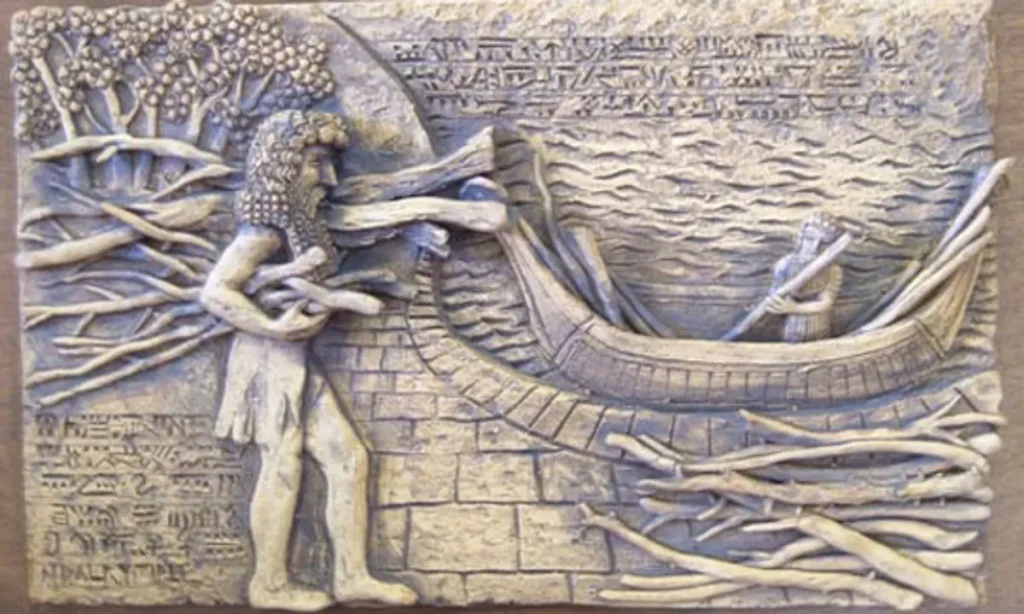
Is There Proof That The Story of Noah’s Ark is True?
The Truth About Tammuz, and Debunking the Comparisons to Jesus
Have you ever stumbled down an internet rabbit hole and found wild claims about ancient gods? If you’ve spent any time reading about mythology or religion online, you might have run into a guy named Tammuz (AKA Dumuzid). There’s a really popular internet rumor that claims the story of Jesus is just a recycled version of the ancient myth of Tammuz. People will say things like, “Look, they were both shepherds, and they both died and came back to life! It’s a total copy!” But is that actually true? Spoiler alert: Nope. Not even close. To really get to the bottom of this, we need to take a trip back in time to the ancient Middle East. Let’s break down exactly who Dumuzid was, how his name ironically ended up in the modern Jewish calendar, and why confusing him with Jesus completely misses the mark. Part 1: Meet Dumuzid, the Ultimate Ancient Shepherd Long before the days of ancient Greece or the Roman Empire, the Sumerians were building some of humanity’s earliest civilizations in Mesopotamia (modern-day Iraq). For these ancient people, surviving the harsh, scorching summers and relying on the unpredictable forces of nature was a daily, life-or-death struggle. They needed gods who represented the things that kept them fed and alive. Enter Dumuzid. Dumuzid (who would later be known by the name Tammuz) was basically the ultimate “Shepherd God.” According to ancient clay tablets, he was a mythical, pre-flood king of a city called Bad-tibira. To the everyday ancient Sumerian, Dumuzid was the divine guy in charge of fertility, farm animals, and agriculture. If you were an ancient farmer, Dumuzid was your best friend. He was specifically linked to providing milk which was a huge deal back then because it spoiled so easily and was hard to keep around. He was also deeply associated with the date palm tree. For ancient Mesopotamians, date palms were the equivalent of a reliable paycheck because they could be harvested all year round, even when it was ridiculously hot and dry. But here is the thing: Dumuzid wasn’t some all-powerful, all-knowing creator of the universe. He had a very specific, earthly job. If you look at the ancient prayers written to him, people weren’t asking for spiritual enlightenment, eternal salvation, or the forgiveness of their sins. They were asking for very practical, physical things: “Please give us more milk,” “Please make our crops grow,” and “Keep our cows healthy.” He was a nature-based god tied directly to the dirt and the animals. Part 2: Love, Betrayal, and the Underworld Drama You absolutely cannot talk about Dumuzid without talking about his wife, Inanna (who was later called Ishtar). She was the powerful Queen of Heaven, the goddess of love and war, and her relationship with Dumuzid is the stuff of ancient soap operas. Read about Inanna Here The story goes that Dumuzid had to compete for Inanna’s heart against a farmer named Enkimdu. Dumuzid basically argued that anything the farmer could offer, he—the shepherd—could do way better. He eventually won her over, and their marriage was a massive deal. In fact, ancient kings used to participate in a symbolic “sacred marriage” ritual in the spring, acting as Dumuzid to ensure the land would be fertile for the upcoming year. Read more about this ritual here. But then, things took a really dark turn in a famous myth called Inanna’s Descent into the Underworld. Inanna decides to visit the realm of the dead. The queen of the underworld isn’t happy about this and strikes Inanna dead. Because Inanna is the goddess of love and fertility, all reproduction on Earth instantly stops. The other gods panic and manage to revive her, but there’s a massive catch: the rules of the underworld say you cannot just leave. You have to leave someone else in your place. So, Inanna heads back home, escorted by terrifying demons, looking for a substitute. When she gets there, she sees that her friends and servants are dressed in rags, weeping and mourning her death. But Dumuzid? He’s chilling on her throne, wearing fancy clothes, completely unfazed that his wife is supposedly dead. Furious at his betrayal and lack of empathy, Inanna points at Dumuzid and tells the demons, “Take him!” Dumuzid gets dragged down to the underworld. Eventually, Inanna calms down and feels a little bad about it, so she makes a compromise: Dumuzid will spend half the year in the underworld, and his sister will take his place for the other half. This story wasn’t just ancient entertainment; it was how they explained the seasons. When the blazing, dry summer hit and all the plants died, it was because Dumuzid was dead in the underworld. When the winter rains returned and the crops sprouted, Dumuzid was back. Part 3: The Weeping Women and the Irony of the Calendar As time went on, the Sumerian Dumuzid became the Canaanite and Babylonian god Tammuz. His followers had a very specific way of worshipping him: intense, public crying. During the middle of the summer, when the land dried up, women would gather to weep over the “death” of Tammuz. In the Hebrew Bible, the prophet Ezekiel has a vision where he is taken to the Temple in Jerusalem. He is absolutely horrified to see Israelite women sitting at the north gate, “weeping for Tammuz.” Why were they crying? In the land of Israel, the life cycle of wheat matches this myth perfectly. The wheat matures and dies in early summer, leaving a seed in the ground. The summer in the Middle East is incredibly dry and barren. The ancient pagans thought this was the tragic death of Tammuz, who left behind grain to feed people. When the winter rains came, the seed sprouted, which they saw as his resurrection. There’s even an ancient stone monument called the Arad Stela found in Israel that shows a grain god lying down and standing up, mapping out this exact cycle! Here is where the story gets
Defending the Savior : Christianity Isn’t About Winning Arguments

Defending the Savior: Christianity Isn’t About Winning Arguments If you’ve been a Christian for any length of time, you have likely found yourself in a conversation about faith that suddenly turned tense. Maybe it was a coworker questioning the historical accuracy of the Bible, or a family member asking how a loving God could allow suffering. In these moments, our heart rate spikes. We feel a sudden, heavy burden to prove our faith, to have the perfect answer, and to “defend the Savior.” This is where the concept of Christian apologetics comes in. But what exactly is apologetics, and more importantly, how are we supposed to use it without losing our peace and our temper? What is Christian Apologetics? At its core, Christian apologetics is the practice of explaining and defending the Christian faith through reason, evidence, and theology. The word itself comes from the ancient Greek word apologia, which simply means to give a reasoned defense or a formal answer. The biblical mandate for this is found in 1 Peter 3:15: “But in your hearts revere Christ as Lord. Always be prepared to give an answer to everyone who asks you to give the reason for the hope that you have.” Many Christians read that verse and assume they need to memorize historical timelines and become master debaters ready to crush opposing arguments. We treat defending the faith like a spiritual boxing match. But if we look closer at the second half of that famous verse, the Apostle Peter adds a crucial, non-negotiable instruction: “But do this with gentleness and respect.” The Savior Doesn’t Need Saving When engaging in faith discussions with skeptics, atheists, or simply curious friends, we often fall into a subtle theological trap: we act as if God is fragile. We get anxious, defensive, and stressed, feeling as though the validity of Christianity rests squarely on our ability to articulate a flawless argument. Here is the freeing truth: Jesus does not need us to save Him. He is the Creator of the universe, the Alpha and the Omega, and the resurrected King. There is a famous quote often attributed to the preacher Charles Spurgeon regarding defending the Bible: “I would as soon defend a lion! Unchain it and it will defend itself.” The gospel is robust. God’s truth can withstand human skepticism. When we are sharing the gospel, our role is to faithfully point to the truth, not to anxiously prop up the Almighty. Recognizing that God is securely on His throne removes the pressure from our shoulders. We are called to be witnesses, not defense attorneys responsible for the final verdict. It’s About Hearts, Not Arguments Because we sometimes forget that God can defend Himself, Christians can easily become hostile or angry during theological debates. When someone attacks our beliefs, it feels personal. We want to win. We want to have the last word and prove the other person wrong. But winning an argument at the expense of a relationship is a devastating loss for the Kingdom of God. If you successfully dismantle someone’s worldview but do so with arrogance and hostility, you haven’t brought them closer to Jesus; you’ve only pushed them further away. Effective Christian witness is rooted in love. When you are asked hard questions about God, listen deeply. Ask your own clarifying questions. Validate their struggles or past church hurts. Speak the truth, but bathe every word in grace. If you don’t know the answer to a tough question, simply say, “That’s a great question, and I don’t know. Let me look into it.” Honesty and humility are far more persuasive than aggressive debate tactics. Defending with Grace and Truth Ultimately, defending the Savior is a bit of a misnomer. We aren’t defending a helpless victim; we are inviting others to meet a victorious King. The next time you find yourself in a challenging conversation about faith, take a deep breath. Remember that you are speaking to someone made in the image of God. Equip yourself with the knowledge of Christian apologetics, understand why you believe what you believe, but always deliver that knowledge with radical kindness. We aren’t called to win arguments. We are called to win hearts for Christ. And that is always done through the perfect balance of grace and truth. Interested in Apologetics? here’s a free ebook you need to read! get the ebook leave a comment
Profile: Inanna, Ishtar, The Biblical “Queen of Heaven”
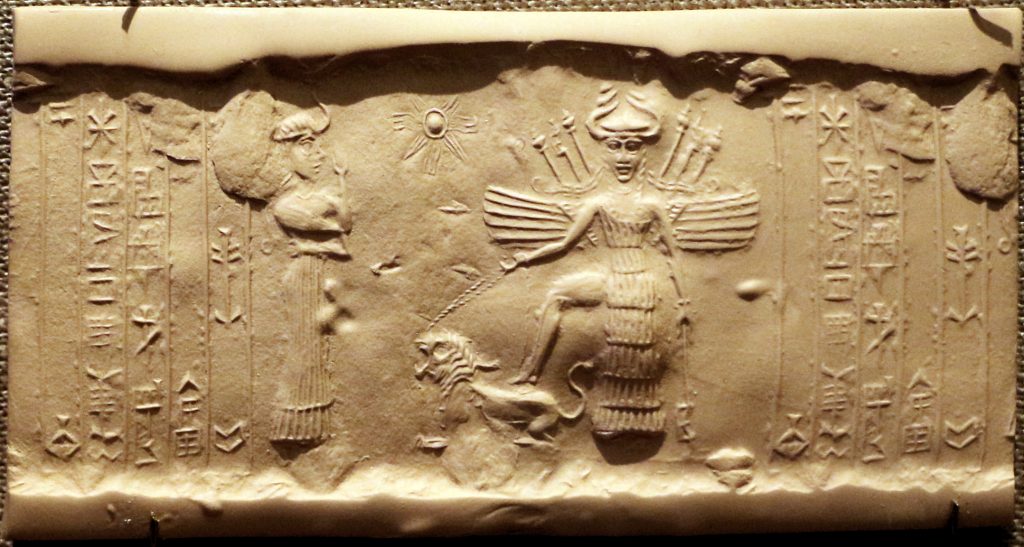
When studying the historical and cultural backdrop of the Old Testament, one figure looms larger than almost any other deity in the Ancient Near East (ANE). Long before the Greeks wrote about Aphrodite, the Sumerians, Akkadians, and Babylonians venerated a fiercely complex goddess named Inanna, later known as Ishtar. If you are reading through the historical books of the Bible or the Prophets, you will repeatedly encounter Israel’s struggle with foreign deities. To understand the cultural gravity of these warnings, we have to look at the data behind the dominant religious system of Mesopotamia. This post serves as an informational profile on Inanna/Ishtar. We will look at her origins, her mythological data, and exactly how her worship intersected with biblical history, from the time of the Patriarchs through the Babylonian Exile. Entity Profile: Inanna / Ishtar To understand how pervasive this figure was, we first have to look at her basic theological profile in the ancient world. She was not a specialized deity; her domains covered the most volatile aspects of the human experience… Unlike modern western conceptions of religion where love and war are opposites, the Ancient Near East viewed both as forces of intense passion, boundary-breaking, and chaos. Inanna was the embodiment of this raw power. Historical Origins and Evolution The development of Inanna into the biblical era is a study in religious syncretism—the merging of different beliefs and deities over time. Her worship spanned thousands of years, evolving as empires rose and fell. The Uruk Period c. 4000–3100 BCE Inanna’s earliest worship is localized in the ancient Sumerian city of Uruk (biblical Erech, mentioned in Genesis 10:10). Her primary temple, the Eanna (“House of Heaven”), becomes a massive economic and cultural center. The Akkadian Empire c. 2334–2154 BCE Sargon of Akkad conquers Sumer. The Akkadian goddess Ishtar is merged with the Sumerian Inanna. Sargon’s daughter, the high priestess Enheduanna, writes famous hymns cementing this syncretism, making Inanna/Ishtar the most prominent deity in Mesopotamia. Babylonian and Assyrian Dominance c. 18th–6th Century BCE Ishtar becomes a supreme deity in Babylon and Assyria. She is heavily associated with state power and military conquest. Her cult spreads westward toward Canaan. Canaanite Syncretism Iron Age (Biblical Era) The mythology and traits of Ishtar heavily influence the Canaanite goddess Astarte. In the Hebrew Bible, she is referred to as Ashtoreth, representing the primary female deity the Israelites are repeatedly warned against worshipping. Direct Biblical Intersections For those studying scripture, Inanna/Ishtar does not appear under her original Sumerian name. Instead, she appears through her cultural descendants and titles. The biblical text presents a localized, historical view of a culture constantly battling the gravitational pull of Mesopotamian and Canaanite religious systems. 1. The “Queen of Heaven” (Jeremiah 7 & 44) In the Book of Jeremiah, the prophet urgently warns the people of Judah about their impending exile to Babylon. One of God’s primary indictments against the people is their devotion to the “Queen of Heaven”—the primary title of Ishtar/Astarte. “The children gather wood, the fathers light the fire, and the women knead the dough and make cakes to offer to the Queen of Heaven. They pour out drink offerings to other gods to arouse my anger.” (Jeremiah 7:18) Historical data shows that baking star-shaped cakes or cakes stamped with the image of the goddess was a standard ritual practice in the cult of Ishtar. When Jerusalem falls and the refugees flee to Egypt (Jeremiah 44), they explicitly tell Jeremiah they will not stop burning incense to the Queen of Heaven, believing that their previous prosperity was tied to her worship rather than to Yahweh. 2. Ashtoreth and the Baals (Judges & 1 Kings) As Inanna’s influence moved west into Canaan, she evolved into Astarte. In the Hebrew text, she is called Ashtoreth. (Linguistic scholars note that biblical writers likely took the name Astarte and inserted the Hebrew vowels for bosheth, meaning “shame,” to discourage her worship). Throughout the book of Judges, the Israelites fall into cycles of worshipping “the Baals and the Ashtoreths” (Judges 2:13). Later, King Solomon famously compromises his faith by building high places for “Ashtoreth the goddess of the Sidonians” (1 Kings 11:5), a political and religious move to appease his foreign wives and neighboring kingdoms. 3. Weeping for Tammuz (Ezekiel 8) One of the most direct connections to Inanna’s mythology occurs in Ezekiel 8:14. God gives the prophet a vision of the abominations happening at the temple in Jerusalem: “He brought me to the entrance of the north gate of the house of the Lord, and I saw women sitting there, weeping for Tammuz.” Tammuz (the Akkadian/Hebrew name for the Sumerian god Dumuzid) was the husband of Inanna/Ishtar. According to Mesopotamian mythology, he was consigned to the underworld for half the year. His descent marked the death of vegetation (summer/autumn), and women would hold annual ritual mourning periods for him until his “resurrection” in the spring. Ezekiel records this exact Babylonian ritual taking place inside the Jewish temple. The Mythological Data: Core Texts To understand the culture Abraham was called out of (Ur of the Chaldeans) and the culture the Israelites were exiled into (Babylon), we must look at the texts that shaped their worldview. Inanna is the focal point of the most prominent ANE myths. The Theft of the Mes (Divine Law) In ancient Sumerian thought, the mes (pronounced “mehs”) were the decrees of the gods that formed the basis of human civilization. They included everything from truth, law, and wisdom to strife, prostitution, and war. In her origin myth, Inanna travels to the god of wisdom, Enki, gets him drunk, and takes the mes back to her city of Uruk. The Epic of Gilgamesh Ishtar plays a pivotal, antagonistic role in the Epic of Gilgamesh—a text famous for containing a Babylonian flood narrative that parallels the Genesis account of Noah. In the Epic, Ishtar demands that the hero Gilgamesh become her consort. Gilgamesh rejects her, citing the terrible fates of all her past lovers. Enraged, Ishtar demands that